Beat the Extreme Heat: Essential Summer Landscaping Tips for Riyadh Homeowners
Summers in Riyadh are non-negotiable. With temperatures steadily climbing past 45°C and intense sunlight baking the soil for 14 hours a day, keeping a home garden alive feels like a daily battle.
Without the right strategy, heat stress can wipe out soft foliage, dry out root systems, and spike your water bill. Fortunately, surviving a Central Region summer isn’t about throwing more water at the problem—it’s about smart design, soil protection, and heat management.
1. Mulch Is Your Best Friend (Don’t Skip It!)
If your garden soil is directly exposed to direct sunlight, its temperature can exceed 50°C, cooking delicate plant roots and causing irrigation water to evaporate within minutes.
- What to Do: Apply a 5 to 8 cm layer of organic mulch (such as shredded bark, wood chips, or date palm fibers) around the base of all trees, shrubs, and flower beds.
- Why It Works: Mulch acts as a thermal blanket—it lowers root-zone soil temperatures by up to 8°C, locks in ground moisture, and prevents crusty soil capping after watering.
2. Install Shade Cloths for Tender Plants
Even heat-tolerant ornamentals like Jasmine, Hibiscus, and young citrus trees can suffer severe leaf burn during July and August peaks.
- Target High-Risk Zones: West-facing garden beds and courtyard corners receive the harshest afternoon sun.
- Use 30% to 50% Shade Cloths: Drape breathable UV-stabilized shade mesh over wooden pergolas or temporary frames. This filters scorching direct rays while allowing sufficient light for photosynthesis.
3. Shift Watering to Pre-Dawn Hours
When you water during the day, as much as 40% of the water volume evaporates before reaching the root system. Worse, stray water droplets sitting on leaves act like tiny lenses, magnifying sun strength and burning foliage.
- The Ideal Window: Program automatic timers to run strictly between 2:00 AM and 5:00 AM.
- Deep & Infrequent: Water deeper into the soil 2 to 3 times a week rather than light daily surface sprinkles. Deep watering encourages roots to grow downwards into cooler, moist soil pockets.
4. Pause Heavy Pruning and Fertilizing
It is tempting to trim back brown branches or add fertilizer to force new growth, but doing so during peak summer puts plants under severe stress.
- Hold the Fertilizer: High-nitrogen fertilizers push plants to grow soft, tender foliage that instantly scorches in dry heat. Save heavy feeding for late October.
- Minimal Trimming: Only cut away completely dead or diseased branches. Leaves—even slightly yellowed ones—provide vital shade to the inner trunk and root structure.
5. Strategic Hardscaping & Hard-Surface Cooling
Dark granite tiles, concrete pavers, and synthetic grass absorb massive amounts of heat throughout the afternoon, radiating high temperatures back onto nearby plants long after sunset.
| Hardscape Choice | Thermal Impact | Better Summer Alternative |
| Dark Granite / Slate Pavers | Traps heat up to 60°C | Light Beige / Cream Riyadh Sandstone |
| Unshaded Concrete | Creates intense radiant heat | Wooden decking or gravel with permeable backing |
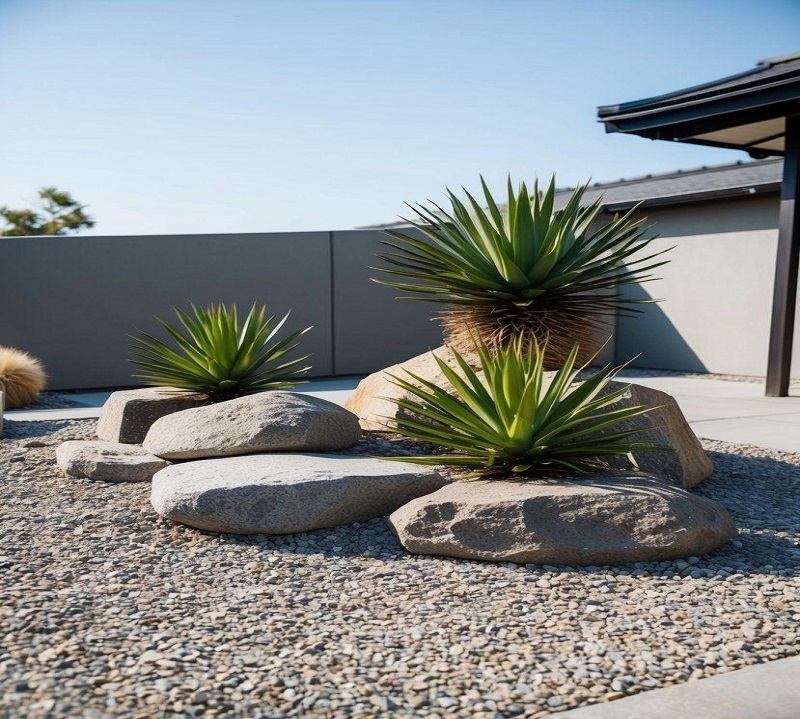
| Low-Grade Synthetic Turf | Gets dangerously hot underfoot | Light-colored gravel or shaded natural groundcovers |