Saudi Arabia’s cities are changing at a pace rarely seen anywhere in the world. Riyadh, Jeddah, Dammam, and dozens of other urban centres across the Kingdom are expanding, modernising, and reimagining what a 21st-century Arabian city looks like. Gleaming towers are rising, new highways are being laid, and entire master-planned communities are taking shape almost overnight. In the midst of this breathtaking transformation, one challenge recurs time and again: what happens to the mature trees that stand in the path of progress?
This is where the science and art of tree transplanting becomes invaluable. Rather than felling established trees — losing decades of growth, ecological value, and visual character in moments — skilled arborists can carefully relocate those trees to new homes within or nearby the development. It is a practice that saves natural heritage, supports sustainability targets, and increasingly, it is a regulatory and reputational expectation for responsible developers across the Kingdom.
In this article, we explore the critical role that tree transplanting plays in urban development, why it matters more than ever in the Saudi context, and how Green Wady — a trusted tree transplanting services company in Saudi Arabia — delivers world-class tree relocation solutions for projects of every scale.
1. Understanding Tree Transplanting: What It Is and Why It Matters
Tree transplanting — also known as tree relocation or tree moving — is the process of uprooting an established tree from one location and re-planting it in another, with the goal of preserving the tree’s health and ensuring its continued growth in its new environment. When done correctly by professionals, tree transplanting is a highly effective method of conserving mature vegetation that would otherwise be lost to construction or development.
Unlike planting a nursery sapling, transplanting a mature tree preserves decades of ecological and aesthetic value immediately. A relocated 15-year-old palm or ghaf tree provides shade, oxygen, habitat, and visual character from day one — assets that a newly planted seedling cannot deliver for years or even decades.
Globally, tree transplanting has become a cornerstone practice in sustainable urban development. From European city-centre redevelopments to major infrastructure projects in Asia, the relocation of significant trees is now considered standard professional practice. Saudi Arabia is rapidly following suit, and companies like Green Wady are leading that transition within the Kingdom.
2. The Urban Development Boom in Saudi Arabia — and the Tree Challenge
Saudi Arabia’s Vision 2030 has unleashed an extraordinary wave of urban development. Giga-projects such as NEOM, Diriyah Gate, Qiddiya, and the Red Sea Project are among the largest construction undertakings in human history. Meanwhile, Riyadh alone is undergoing a comprehensive urban expansion that includes new metro corridors, expanded road networks, commercial districts, and vast residential communities.
Each of these projects inevitably encounters mature trees — date palms lining historic avenues, ancient sidra trees in old neighbourhoods, ornamental trees in established parks, and indigenous species that have taken root over generations. The conventional approach — clearing the site entirely — is increasingly untenable, both environmentally and from a public relations standpoint.
The Saudi Green Initiative has set a national goal of planting 10 billion trees across the Kingdom. Cutting down existing mature trees while simultaneously pledging to plant billions more is a contradiction that no responsible developer can afford. Tree transplanting offers the resolution: preserve what already exists, relocate it intelligently, and plant new trees alongside it. This integrated approach is exactly the model that Green Wady champions as the foremost tree transplanting services company in Riyadh and across Saudi Arabia.
3. Environmental and Ecological Benefits of Tree Transplanting
The environmental case for tree transplanting in urban development is compelling and multi-dimensional. Mature trees are ecological assets of enormous value — assets that take decades to accumulate and cannot simply be replaced by planting new saplings. When a large tree is transplanted rather than destroyed, the following benefits are preserved:
Carbon Sequestration
Mature trees store significantly more carbon than young trees. A large, healthy tree may sequester many times more CO2 annually than a newly planted sapling. Preserving and relocating these trees directly supports Saudi Arabia’s carbon reduction commitments and sustainability goals under Vision 2030.
Urban Heat Island Mitigation
Saudi Arabia’s cities already experience extreme urban heat, which is worsened by the replacement of natural vegetation with built surfaces. Mature transplanted trees provide immediate shade and evapotranspiration cooling that can meaningfully reduce local temperatures — a critical benefit in cities like Riyadh and Jeddah where summers regularly exceed 45°C.
Biodiversity and Habitat Preservation
Established trees support complex ecosystems including birds, insects, and microorganisms. When Green Wady transplants a mature tree, it preserves those ecosystems rather than destroying them. In cities where natural habitats are already fragmented, every preserved tree counts.
Air Quality Improvement
Large trees filter airborne pollutants, particulate matter, and dust — a particularly important function in Saudi Arabia’s dusty urban environment. Transplanted mature trees continue providing this air quality service without interruption, while newly planted trees take years to develop meaningful filtering capacity.
4. How Green Wady Approaches Tree Transplanting in Saudi Arabia
As the most experienced Green Wady — a dedicated professional tree transplanting company in Saudi Arabia — approaches every relocation project with a rigorous, science-based methodology honed through years of working in the Kingdom’s unique climate and soil conditions. No two trees are the same, and no two sites are the same, which is why Green Wady’s process is always tailored to the specific needs of each individual project.
Step 1: Pre-Transplant Assessment and Planning
Every successful tree transplant begins long before any digging starts. Green Wady’s certified arborists conduct a thorough on-site assessment of each tree earmarked for relocation. This includes evaluating the tree’s species, age, size, root structure, overall health, and any existing stress factors. The receiving site is also assessed for soil quality, drainage, sun exposure, and space adequacy.
This assessment phase is critical and often overlooked by less experienced operators. Not all trees are transplantable — some species do not tolerate root disturbance, and some trees in poor health may not survive the process. Green Wady’s honest, expert evaluation at this stage saves clients from investing in relocations that are unlikely to succeed, while ensuring that viable trees are preserved.
Step 2: Root Pruning and Pre-Conditioning
For larger trees, Green Wady implements a root pruning programme weeks or months before the actual transplant. This involves carefully severing the outer roots at the planned root ball boundary, encouraging the tree to develop a denser network of feeder roots closer to the trunk. This pre-conditioning dramatically improves transplant survival rates by reducing transplant shock.
This step is one of the most important differentiators between a professional tree transplanting services company in Riyadh like Green Wady and less experienced operators who skip pre-conditioning and experience high tree mortality rates as a result.
Step 3: Excavation and Root Ball Preparation
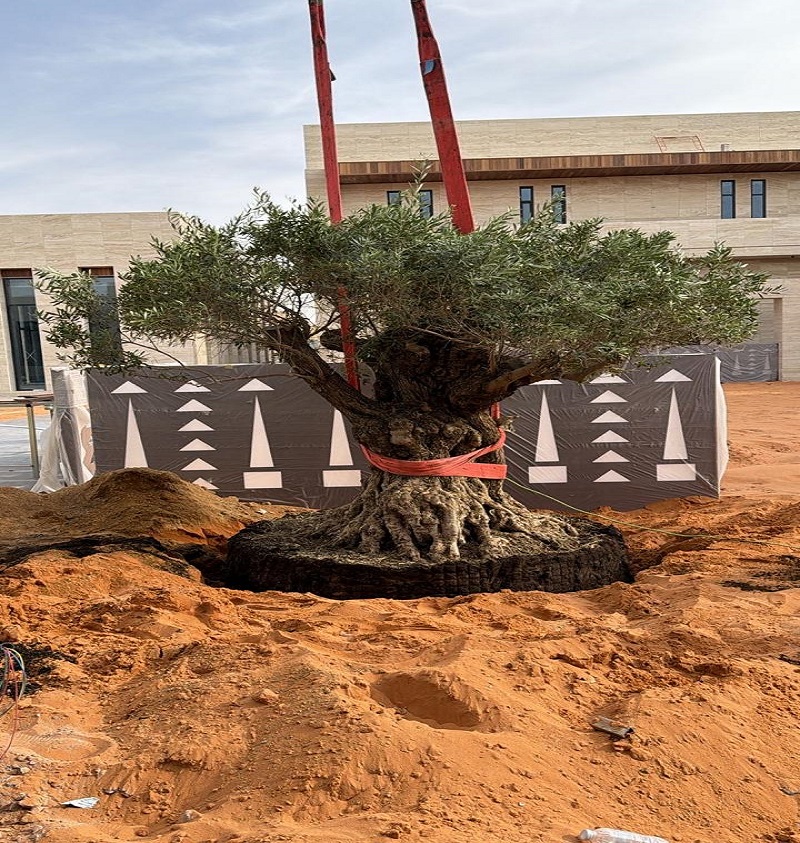
Using a combination of specialist tree spades, mechanical excavators, and careful hand digging, Green Wady’s teams excavate a root ball appropriate to the size of the tree. The root ball is carefully wrapped in burlap or enclosed in a wire basket to maintain its integrity during transport. For very large trees — palms, mature shade trees, specimen ornamentals — this is a precise engineering exercise requiring specialist equipment and highly trained operators.
Step 4: Transportation and Replanting
Green Wady operates a fleet of specialist tree transport vehicles, including low-loaders and crane-equipped trucks capable of handling trees of virtually any size. The transportation phase is carefully planned to minimise the time the tree spends out of the ground, and routes are selected to avoid vibration, damage, or prolonged sun exposure.
At the receiving site, the planting hole is prepared to precise specifications — soil amendments are added, drainage is verified, and the tree is positioned and planted at exactly the correct depth and orientation. Proper planting depth is critical: too shallow and the tree is vulnerable to wind; too deep and the roots suffocate.
Step 5: Post-Transplant Care and Monitoring
Transplanting does not end at replanting. Green Wady provides comprehensive aftercare programmes for all relocated trees, including specialist irrigation scheduling, soil health monitoring, anti-stress treatments, structural support staking, and regular arborist inspections. In Saudi Arabia’s harsh climate, this aftercare phase is particularly critical — the transplanted tree needs close attention and expert support during its establishment period, which can last one to three years depending on the species and conditions.
5. Tree Species Green Wady Transplants in Saudi Arabia
Saudi Arabia’s diverse urban landscape includes a wide variety of tree species, each presenting its own transplanting challenges and requirements. Green Wady has developed deep expertise in transplanting the species most commonly found in Saudi urban environments:
- Date Palms (Phoenix dactylifera) — iconic to the region and highly transplantable when handled correctly
- Ghaf Trees (Prosopis cineraria) — Saudi Arabia’s national tree and a resilient desert species
- Neem Trees (Azadirachta indica) — widely planted for shade and their hardy nature
- Ficus species — large shade trees common in older neighbourhoods and commercial areas
- Bougainvillea — vigorous climbing plants often requiring relocation during wall or fence changes
- Eucalyptus — fast-growing shade trees found in parks and along roadsides
- Acacia species — native desert trees with significant ecological value
- Ornamental palms — including Washingtonia, Bismarckia, and Livistona species
- Olive trees — increasingly popular in Saudi landscapes for their Mediterranean aesthetic
6. Tree Transplanting for Riyadh’s Urban Development Projects
Riyadh is at the epicentre of Saudi Arabia’s urban transformation. The capital is simultaneously expanding its metropolitan footprint, densifying its existing urban fabric, and undergoing major infrastructure upgrades. As a result, the demand for professional tree relocation services in Riyadh has never been higher. Green Wady, as the premier tree transplanting services company in Riyadh, has played a central role in facilitating this development while preserving the city’s existing green heritage.
From the relocation of mature palms along historic King Fahd Road to the preservation of specimen trees from sites being redeveloped as part of Riyadh’s expanding commercial districts, Green Wady’s Riyadh teams are on the front line of the city’s green transition. The company works closely with Riyadh Municipality, major real estate developers, infrastructure contractors, and private landowners to integrate tree transplanting seamlessly into project timelines and budgets.
Green Wady also provides tree transplanting advisory services to Riyadh-based developers during the planning phase of projects — helping them identify which trees on their sites can be saved, where those trees should be relocated within or adjacent to the development, and how to factor tree preservation into the overall landscape masterplan. This proactive approach consistently produces better outcomes for trees, developers, and the city as a whole.
7. The Economic Case: Why Tree Transplanting Makes Financial Sense
Beyond the environmental arguments, there is a compelling financial case for tree transplanting in urban development projects. Developers who dismiss tree relocation as an unnecessary expense often fail to account for the full economic picture.
Mature Trees Are Assets With Real Monetary Value
A mature, healthy tree has an appraised financial value that can range from thousands to tens of thousands of Saudi Riyals, depending on the species, size, and condition. Destroying a mature tree to avoid a relocation cost is often equivalent to discarding an asset of significant value. Conversely, incorporating transplanted mature trees into a new development instantly elevates its visual quality and market positioning.
Enhanced Property Values
Research consistently demonstrates that properties with established trees command higher sale prices and rental rates than comparable properties without them. Developers who transplant mature trees into their new projects benefit from this premium immediately upon completion, rather than waiting years for newly planted trees to provide meaningful visual and functional value.
Regulatory Compliance and Avoiding Fines
Saudi Arabia’s municipal authorities increasingly require developers to submit tree preservation plans and obtain permits before removing or relocating significant trees. Engaging a professional tree transplanting company in Saudi Arabia like Green Wady ensures full regulatory compliance, avoiding costly delays, fines, or reputational damage from publicised tree destruction.
Community Relations and CSR
Public opinion in Saudi Arabia is increasingly sensitive to the treatment of mature trees in development projects. Developers who visibly invest in tree transplanting demonstrate a commitment to sustainability and community values that enhances their corporate reputation and strengthens relationships with municipal authorities, local communities, and media stakeholders.
8. Tree Transplanting and the Saudi Green Initiative
The Saudi Green Initiative, launched by His Royal Highness Crown Prince Mohammed bin Salman, represents one of the most ambitious environmental commitments in the Middle East. The initiative’s goal of planting 10 billion trees across Saudi Arabia, restoring degraded lands, and increasing the Kingdom’s green cover requires a multi-pronged approach — and professional tree transplanting is an important part of that strategy.
Every mature tree that Green Wady successfully transplants is a tree that continues to contribute to the Kingdom’s carbon sequestration targets, biodiversity goals, and urban cooling objectives. Rather than replacing a felled mature tree with a sapling that will take 15 years to reach comparable size and function, a transplanted tree continues its ecological work without interruption. This is why partnering with a professional tree transplanting and relocation company in Saudi Arabia is not merely a convenience — it is a direct contribution to national environmental goals.
Green Wady is proud to be an active partner in Saudi Arabia’s green transformation. The company aligns all of its practices with Saudi Green Initiative principles, from using water-efficient post-transplant irrigation systems to sourcing soil amendments from sustainable suppliers. Every Green Wady project contributes measurably to the Kingdom’s environmental future.
9. What to Look for in a Professional Tree Transplanting Company in Saudi Arabia
Not all tree transplanting service providers are equal. The technical complexity of successfully relocating mature trees means that experience, equipment, and methodology matter enormously. When evaluating a tree transplanting services company in Saudi Arabia, developers and property owners should consider the following criteria:
- Proven experience with the specific tree species to be relocated
- Certified arborists on the team with recognised professional qualifications
- A fleet of specialist equipment including tree spades, root ball wrapping tools, and appropriate transport vehicles
- A documented pre-transplant assessment process and honest evaluation of transplant viability
- A comprehensive post-transplant aftercare programme with defined monitoring milestones
- References and a verifiable portfolio of completed transplant projects
- Knowledge of local regulations and permitting requirements across Saudi municipalities
- Insurance and liability coverage appropriate to the scale of work being undertaken
Green Wady meets all of these criteria and more. As a full-service professional tree transplanting company in Saudi Arabia with a dedicated team of certified arborists, state-of-the-art equipment, and a track record built across hundreds of successful transplant projects, Green Wady is the benchmark against which other providers are measured.
10. The Future of Tree Transplanting in Saudi Urban Development
As Saudi Arabia’s cities continue to grow and evolve, the role of tree transplanting will only become more significant. Several key trends point towards a future in which professional tree relocation is a standard, expected component of every major urban development project in the Kingdom.
Stronger Municipal Regulations
Saudi municipal authorities are progressively strengthening tree protection regulations, requiring developers to account for significant existing trees in their planning submissions. Companies that develop in-house expertise in tree transplanting — or partner with specialists like Green Wady — will navigate these evolving requirements more efficiently than those who do not.
Growing Developer Awareness
The leading real estate developers and infrastructure contractors in Saudi Arabia are increasingly aware of the reputational, commercial, and environmental value of tree preservation. As best practice sharing increases across the industry, tree transplanting will shift from an optional premium service to a standard item in project specifications.
Technology-Enhanced Tree Transplanting
Advances in transplanting technology — including improved root ball excavation machinery, air spade tools for non-destructive root exposure, bio-stimulant treatments that reduce transplant shock, and GPS-tracked irrigation monitoring systems — are making it possible to successfully relocate trees of ever-larger sizes and in ever-more challenging conditions. Green Wady continuously invests in the latest transplanting technologies to ensure the highest possible success rates for its clients.
Integration with Urban Greening Masterplans
Forward-thinking municipalities and developers are beginning to integrate tree transplanting into comprehensive urban greening masterplans — identifying trees for relocation years before construction begins, designating receiving sites within new developments, and tracking transplanted trees as part of broader green infrastructure inventories. Green Wady is already working with several visionary clients in Riyadh and across Saudi Arabia to develop this kind of long-term, integrated approach to urban tree management.
Conclusion: Green Wady — Preserving Saudi Arabia’s Trees, One Project at a Time
Tree transplanting is far more than a technical service — it is an expression of values. It says that a developer or property owner understands the true worth of mature trees; that they are prepared to invest in preservation rather than simply defaulting to destruction; and that they take their environmental responsibilities seriously in a country that is staking its future on a greener, more sustainable vision.
As the leading Green Wady is uniquely positioned to help Saudi Arabia’s developers, municipalities, and property owners navigate the challenges and opportunities of urban tree transplanting. With deep local expertise, world-class methodology, specialist equipment, and an unwavering commitment to tree survival and client satisfaction, Green Wady delivers transplanting outcomes that exceed expectations — project after project, tree after tree, city after city.
Whether your project is a giga-development relocating hundreds of mature palms or a private villa garden requiring the careful movement of a single prized specimen tree, Green Wady’s team is ready to deliver. Contact us today to discuss your tree transplanting requirements and discover why Green Wady is the first choice for discerning developers and property owners across Saudi Arabia.